Developmental Diplomatic Empowerment (DDE): Institutionalizing Sustainable Development as Structural Soft Power in Arab Foreign Policy
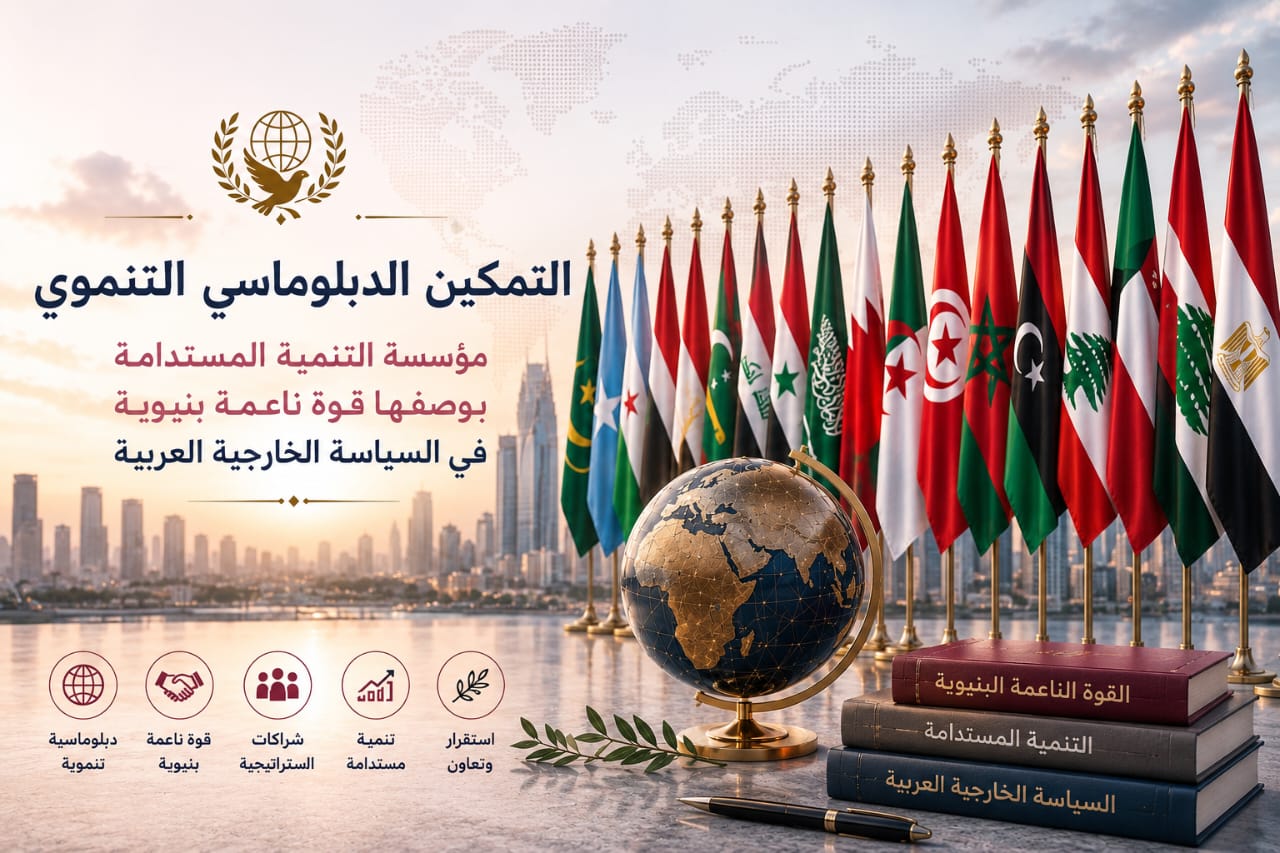
This study addresses a theoretical gap in the literature on development diplomacy, namely the absence of an analytical framework capable of explaining how sustainable development becomes a structural resource for generating diplomatic influence when institutionally embedded within foreign policy decision-making structures. The study aims to test a proposed analytical framework—Developmental Diplomatic Empowerment (DDE)—as an interpretive lens linking institutional integration, strategic sustainability, and multi-actor engagement in explaining the relationship between development and international influence.
The research adopts a qualitative analytical-comparative design based on the examination of official documents, national strategies, and development initiatives with external reach across four Arab cases: Qatar, the United Arab Emirates, Morocco, and Palestine. The selection of these cases enables the operational testing of the framework across diverse political and economic contexts.
The findings indicate that development becomes a form of structural soft power when three interrelated conditions are present: (1) institutional linkage between development and foreign policy, (2) incorporation of sustainability into the national external narrative, and (3) the deployment of development initiatives through multi-level diplomatic partnership networks. The comparison further shows that developmental influence does not follow a single pattern but rather multiple forms shaped by institutional configurations and modes of policy deployment.
The study contributes to the international literature by clarifying the institutional mechanisms through which the integration of development into foreign policy generates differentiated patterns of diplomatic influence. Furthermore, it offers an analytical framework suitable for testing in cross-regional comparative research.

This work is licensed under a Creative Commons Attribution-NonCommercial 4.0 International License.
- الأحبابي، سلمان فارس سالم. (2024). المساعدات التنموية والإنسانية القطرية عبر الأمم المتحدة: القوة الناعمة وتعزيز المكانة الدولية. مركز الإمارات للدراسات والبحوث الاستراتيجية.
- (English References)
- 1. Al-Ahbabi, S. F. S. (2024). Qatar’s development and humanitarian aid through the United Nations: Soft power and national interest. Doha Institute for Graduate Studies.
- 2. Alves, A. C. (2022). Development diplomacy in the Global South: Rethinking aid, influence, and global partnerships. Third World Quarterly, 43(1), 45–62. https://doi.org/10.1080/01436597.2021.1965872
- 3. Amnesty International. (2023). Israel’s apartheid against Palestinians: A cruel system of domination and a crime against humanity. Amnesty International.
- 4. Bachmann, V., & Sidaway, J. D. (2023). Developmental geopolitics and soft power strategies in a changing global order. Geopolitics, 28(2), 355–374.
- https://doi.org/10.1080/14650045.2021.1965879
- 5. Bergamaschi, I. (2023). Sustainable partnerships and global development cooperation in transition. Development Policy Review, 41(1), e12610.
- https://doi.org/10.1111/dpr.12610
- 6. Chaturvedi, S. (2023). Reimagining development diplomacy: Southern perspectives and institutional innovations. International Development Policy, 15(1), 77–95.
- 7. El-Masri, S. (2022). Soft power, development, and state branding in the Middle East. Journal of International Relations and Development, 25(3), 512–530.
- 8. Gulrajani, N. (2020). The rise of new development diplomacy in middle-income countries. Public Administration and Development, 40(4), 159–173.
- 9. Hertog, S. (2022). State capitalism and development diplomacy in the Gulf: Corporate extensions of foreign policy. Middle East Journal, 76(4), 521–540.
- 10. Joffé, G. (2024). Sustainable development and geopolitical partnerships in the MENA region. Middle East Policy, 31(1), 35–54.
- 11. Le More, A. (2008). International assistance to the Palestinians after Oslo: Political guilt, wasted money. Routledge.
- 12. Lund, C. (2022). Diplomacy and development: Institutional convergence and global governance. Global Affairs, 8(2), 101–118.
- 13. Lund, C., & Carlsnaes, W. (2021). Global development diplomacy: Understanding the evolution of development as statecraft. International Studies Quarterly, 65(4), 1021–1038.
- 14. Milton-Edwards, B. (2020). Contemporary politics in the Middle East (4th ed.). Polity Press.
- 15. Molajani, M. (2021). Development diplomacy revisited: Security, economics, and international partnerships. Policy and Society, 40(3), 403–420.
- 16. Nye, J. S. (2021). Soft power: The evolution of a concept. Foreign Policy Analysis, 17(3), orab013. https://doi.org/10.1093/fpa/orab013
- 17. OECD. (2022). Regional development trends in North Africa. OECD Publishing.
- 18. Roth, K. (2023). Development as an instrument of foreign policy. Foreign Affairs, 102(3), 88–104.
- 19.
- Sasse, G. (2022). Civil society and international legitimacy in conflict-affected regions. Global Civil Society Yearbook.
- 20. UNDP. (2022). Human development report 2021/2022: Uncertain times, unsettled lives. United Nations Development Programme.
- 21. UNDP. (2023). Programme of assistance to the Palestinian people: Annual report. United Nations Development Programme.
- 22. Wilson, C. (2022). Soft power, sustainable development, and global interdependence. Global Governance, 28(1), 55–71.
- 23. Woertz, E. (2023). Gulf economic diplomacy and global development engagement. Middle East Policy, 30(2), 74–90.
- 24. World Bank. (2021). West Bank and Gaza economic monitoring report. World Bank.
- 25. World Bank. (2023). Climate and development in the Middle East and North Africa. World Bank.